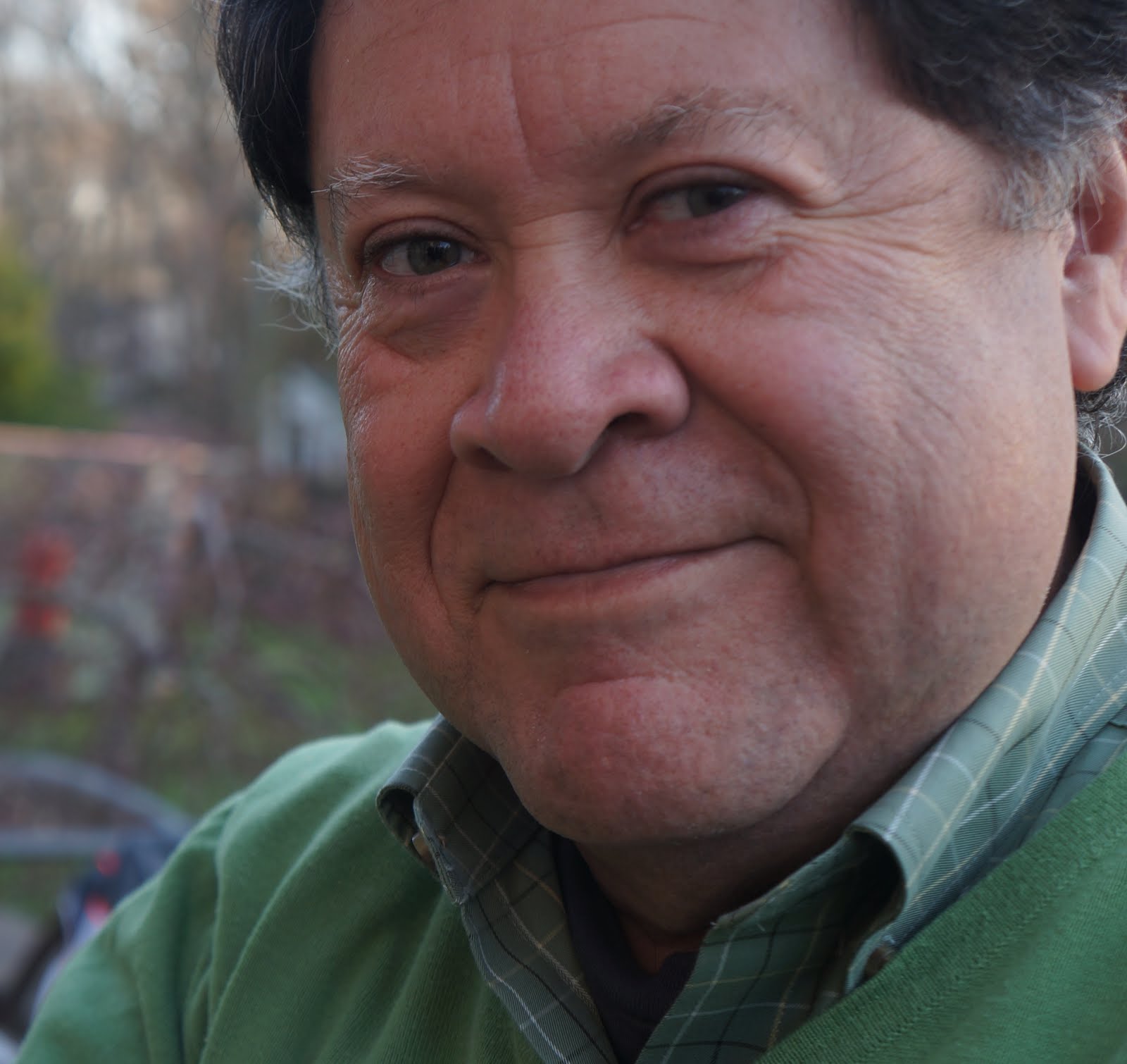
Tony completed a major in Spanish, an Concentration in Literary and Cultural Studies and a double minor in Business Administration and Legal Studies. Tony was President of Bryant’s chapter of the Phi Sigma Iota foreign language honor society his senior year, served as the Spanish representative to the Dean’s Advisory Council, and studied abroad in Granada, Spain. Tony was awarded the Department of Modern Language’s Commencement Award in 2015. Tony is currently working as a Sales Associate in the Men’s Clothing and Furnishing department at Nordstrom’s in Natick, MA.
Claire was a double major in Literary and Cultural Studies and Spanish, with a double minor in Business Administration and Latin American Studies. Claire also studied abroad in Granada, Spain, served as Vice President of Bryant’s chapter of the Phi Sigma Iota foreign language honor society her junior and senior years, and was recognized with an award for Academic Achievement in Spanish. Claire is currently a Spanish Teacher at LaSalle Academy in Providence, RI.
1. What are your favorite memories of being a Spanish major at Bryant? What are your least favorite memories?
Claire: Being a Spanish major at Bryant is full of wonderful memories and I always had a lot of fun in my classes. I made some great friends and loved being able to serve as VP of Phi Sigma Iota for two years, working with Profe Moon and with Tony. I also became really close with my fellow Spanish classmates as the small class sizes allowed and encouraged me to interact with them in a variety of contexts- from discussing history to culture to film and literature. I loved taking courses that focused on film and literature and being able to delve purposefully into real cultural texts. It’s hard to narrow down my four years to a few select memories – almost every class was a positive experience. My least favorite memory? Graduating! ;)
Tony: My favorite memories include my directed study! That was obviously one of the best experiences at Bryant. Being able to study and develop skills around something that was tailored specifically for me was great and something many other universities may not allow or even push as hard as Bryant did with it. I think another great memory was in one of my classes (I never can remember the names of them!)- it was the one with me, Nikki, and Emily in a group performing our little play thing. Looking back, I dreaded the preparation of it and thought it was pointless but honestly, it gave me more confidence in my ability as a Spanish student since we were not being very serious but using the language. Usually everything was more or less serious and that gave us, well at least me, a new way to use Spanish and everything I learned in a different way. And of course, spending down time with Profe Moon and Claire would probably be the best memories of being a Spanish major. I gained two amazing people in my life from it! You both are individuals that I know I can go to with just about anything and always give me advice whenever I may need it! Least favorite memory would probably be just being asked constantly why I was at Bryant since I was not a Business major. There isn’t one specific time that sticks out for me, it was just the constant questions about what led me to Bryant and (OH) if I was going to be a teacher!!! That’s my least favorite memory haha :)
2. What was it like to be an Arts and Sciences major at Bryant?
Claire: When I first entered Bryant, I was declared as an International Business major. It took me about a semester to realize that I had selected that major for the language component and the requirement to study abroad. I switched over to LCS and Spanish majors as soon as I could. Changing my major to the Arts and Sciences was absolutely the best decision I made academically at Bryant. And not to bash the Business school! While I was an IB major I had some incredible professors who I am still in touch with. I just had found my niche at Bryant within the LCS and Spanish departments. The support I received from faculty and certain members of administration was heartening and encouraging. I had the chance to focus in areas that I was really passionate about and have really interesting conversations with others who shared those passions. There were challenges to being an Arts and Sciences major at a school that is primarily known for its business school. In a lot of the classes I took for my major, I was surrounded by students who were only taking them as core requirements. There were times when the majority of the students in my classes were apathetic towards the material and dismissed it as unimportant, making it hard to feel valued as an Arts and Sciences major. Luckily, though, the network of professors worked really hard to ensure that my academic endeavors were always supported and valued. Even through the hard times as an A&S major, I wouldn’t change a thing about the path I took at Bryant. The faculty and peers I connected with were incredible and made my experience one that I look back on with fondness and gratefulness. I mean, it’s not at every school that you meet professors for tacos to talk about writing or head to office hours to talk about class for a minute and life for a half hour.
Tony: The answer for this kind of is the same as above, in that I enjoyed it because it was what I wanted to do with myself but at the same time, everyone around me was judging me for it, well at least those outside of the Arts and Sciences world. Within our college, however, I felt like everyone supported each other and understood what we were all going through. We never really questioned each other about why we chose Bryant or thought less of each other because we were at Bryant.
3. What advice would you give current Spanish majors?
Claire: There are a lot of opportunities that arise from majoring in a foreign language. One of the biggest is being able to communicate and connect with people in their native tongue when you travel. As a Spanish major at Bryant, I’d recommend taking a survey of the courses offered. Some of my favorite classes focused on film and literature throughout the Spanish speaking world. Having a deeper understanding of the cultural context of these texts challenges and enhances your global perspective. Also, STUDY ABROAD! It’s the most incredible opportunity and honestly the best way to engross yourself in the language and culture. The beauty of majoring in Spanish is the variety of universities to choose from. I studied in Granada, Spain and had the most incredible experience. Living with a host family, taking all of my classes in Spanish, and traveling around Spain allowed me to overcome my nerves and just speak to people in real, authentic conversations. As fantastic as the program is at Bryant, there’s no comparison for language learning than just going for it and throwing yourself into the Spanish speaking world.
Tony: I think I would tell Spanish majors not to listen to those who may try and belittle you for being different and not to be afraid to be different. You can do so much with a Spanish degree that outsiders may not realize. I would tell them to have some sort of Business background so that they might be able to get a job easier, depending of course what they want to do post Bryant. Finally, I would tell them you DO NOT have to be a teacher or professor if you don’t want to be. Everyone will ask you this, but just have to be assertive and give them reasons why not to ask you and prove to them that you can do more than they may think.
4. Where do you see yourself in five years?
Claire: This is a question I ask myself quite frequently. Currently, I’m teaching high school Spanish in Providence, which I really enjoy. I’m currently looking into Masters in Spanish programs and Masters/Doctoral programs in Latin American Studies and Community Development. Hopefully, I’ll be enrolled in a graduate program and on my way to working in a Spanish-speaking community or somewhere in Latin America.
Tony: In five years…. SCARY! If I am still at Nordstrom, I hope to have moved up within the company and be working in Seattle at headquarters. Nordstrom is a great company and one that I enjoy working for. I would love to be able to move up and become a buyer for the company. It may be a long journey to get there, but I’m hopefully that I’ll be able to get there in five years or less! (Hopefully less!)
5. What impact has your Spanish major had on your career so far? On other aspects of your life?
Claire: Majoring in Spanish had a pretty direct and prominent role in my career thus far, as I am currently a high school Spanish teacher. Aside from (obviously) using it on a daily basis in the classroom, I have found myself reading more stories by Latino authors, browsing through the Spanish language films on Netflix when I’m bored, listening to the Spanish radio station in the car and speaking Spanish at any opportunity. Working towards my major, I was pretty hesitant to practice my speaking skills- embarrassed is probably a more appropriate word. But the encouragement of the faculty in the department and my time abroad really helped me to break out of my shell and overcome those nerves. Spanish is taking over my life!
Tony: So being a Spanish major thus far has not had a huge impact on my career yet. I know that eventually, I will be able to use it to communicate with customers who walk in that may not speak English or may not understand English and that will give me a leg up to everyone else that I work with who does not speak or understand Spanish. I will also be able to use it further down the road if and when I have to relocate to another part of the country or even if we, as a company, expand outside to a Spanish speaking country. I have been able to use my Spanish skills to become closer friends with many employees whose primary language is Spanish and am I able to discuss not only my time at Bryant with customers, but also my time abroad whenever I see fit. I have brought one, if not both, up almost every day at work which makes me proud. (On a side note, we have what is called “gratis” at work for free products every so often and everyone pronounces it “grat-is” instead of the proper pronunciation. It killed me every time I heard it and finally told people in my department how to properly pronounce gratis. That was a great moment :) )